
England at the End of the 17th Century
In the time of Chaucer and Wycliffe, according to Trevelyan, education was still a luxury for the clergy and such poor boys as were clever and had aspirations to the church. By modern standards it was not much of a luxury, rarely amounting to more than basic reading, writing and Latin, but was supplied by clergy in a few hundred grammar schools across the country and mostly attached to monasteries and cathedrals. The masses had to wait until the 18th century with the arrival of the Charity Schools.
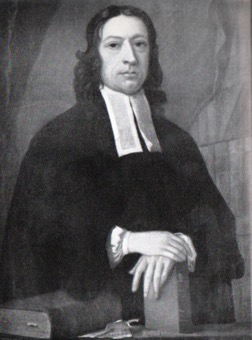
John Wesley
The impetus for change came from Religious Societies springing up towards the end of the 17th century with SPCK in the forefront. They were the product of a society shocked by a lack of decency, manners and good behaviour, threatened by a breakdown of law and order, fearful for its own security and committed to 'preventing and punishing immorality and profanness'. With the passing of time the agenda became more positive as Christians of the calibre of Thomas Bray came to see the weakness of coercion and felt education to be a better way, resulting in a greater emphasis on those Societies of young men anxious to lead a more godly life. From these people came the spirit that led to the creation of SPCK and paved the way for the work of John Wesley and the arrival of Methodism, providing a fertile soil for the Charity Schools.
Motivation in any society is rarely pure and though there were those who saw their commitment to Charity Schools as a commitment to education and the needs of the poor there were others whose understanding of education had not progressed far beyond 'my station and its duties' and whose driving force was still the fear of a godless society and the lack of security that went with it. There were also those who saw it as the basis for safeguarding the future of the traditional church, some as an antidote to the Dissenters and some as a way of competing with the Dissenters whose exclusion from the universities, etc had led them to create schools, academies and institutes extending to all levels of education.
In the case of SPCK the founders seem to have been motivated by an increasing sensitivity to the needs of the poor, part of a much wider philanthropic movement which also saw the creation of hospitals and in due course Sunday Schools, and by a particular awareness of the damage resulting from a total lack of education even among the honest unskilled workers at the beginning of the 18th century, and it was this second motive which lay behind the Charity Schools.
Wesley Connection
SAMUEL WESLEY was one of the early supporters as was his brother, John, once SPCK became involved in missionary work in Georgia, stimulated by the stories his mother had told him of the work of the missionaries through the East India Company. SPCK therefore sent John to Georgia c 1734 but unfortunately the trip was not successful and he returned in 1738.
Even so, motives were as mixed then as they are today and it would be wrong to imagine that they understood by education what we understand by it. Education for the most part was not so much about freedom or exploration of ideas as about decency, morality and maintaining the tone of society. That included 'knowing your place' and 'the requirements of your betters’, as demonstrated by Trevelyan’s account of Jonathan Brown, a leading personality among the bargemen, who confessed to a dissenting preacher that he and his companions would be happy to burn down either Meeting Houses or Popish Chapels according to the requirements of their betters even though they 'had never so much as heard who or what Christ was'.
Literature therefore meant leaflets and tracts against such offensive practices as swearing, drunkenness, Sunday trading and public indecency. Tracts with titles such as 'Kind Cautions against Swearing', for example, were being distributed to the 18th century equivalent of taxi drivers and 'Kind Cautions to Watermen' (for the bargees of the West Country) to the equivalent of bus conductors and tube workers. To this market SPCK contributed its share with tracts for public house keepers, Malborough’s soldiers and some written by none other than Nelson himself for his seamen though Thomas Bray was one of the more enlightened who saw the limitations of coercion.