
After Tools for the Clergy, Charity Schools and general education the third major concern of the Founding Fathers of SPCK, who lacked nothing in the breadth of their vision nor the enthusiasm to get things moving, was the needs of the clergy in The Plantations (or Colonies).
In an age marked by exploration overseas, missionary and colonial expansion Literacy, Literature and Libraries at home was only for starters. Caring (as well as greedy) eyes were looking eastwards, and in 1711 SPCK heard the call. India was top of their agenda with a plan to send a printer and printing press to Tranquebar in a joint venture with Danish and German Protestant Missions. Unfortunately, the sea was not always calm and their first adventure far from plain sailing.
Early Printing
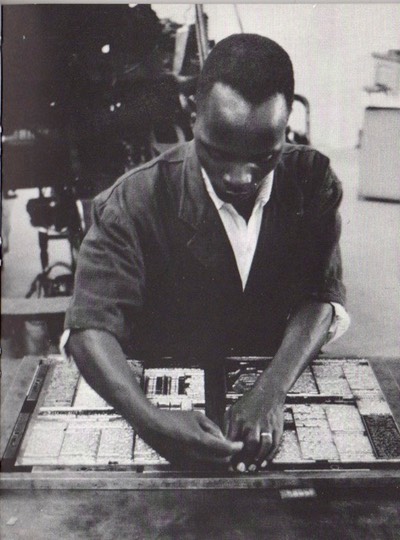
Printing Presses in the 18th century were large and heavy metal objects. Typesetting with lead type was both laborious and time consuming but they changed little until well into the 20th century when they died the death with the the arrival of the computer.
Ship-wrecked on the High Seas
From the beginning of the century, Frederick IV of Denmark had been getting excited about foreign missions, thanks largely to his chaplain, but could find no missionaries to fulfil his dreams. Turning to Saxony he came up with a couple of missionary volunteers who left for India in 1705. The venture was unfortuitous. After narrowly avoiding ship-wreck off South America and being detained a fortnight at the Cape of Good Hope, they arrived after eight stormy months at sea only to be ridiculed on arrival, having no language (Tamil) and found themselves shocked by the immoral lives of the local Christians.
Nothing daunted they applied themselves to the task in hand and by 1711 had translated all the New Testament into Tamil. SPG, limited by its Charter to work in the English Plantations and Colonies, was unable to help but SPCK, with no Charter, had greater freedom and decided to send a printing press ‘with Roman letters and all necessary apparatus’, together with Joseph Fincke, a qualified printer.
This venture too, however, had its hazards. First, the ship was captured by the French off the coast of Brazil and Fincke taken prisoner-of-war. Following a ransom (the Society paying £150 and a generous passenger the remaining £3,350), Fincke then caught a fever and died off the Cape of Good Hope after falling overboard one night. However, once the press arrived, in 1712, carrying 100 reams of paper, books and other supplies, the missionaries managed to find a soldier capable of handling it and in no time at all hymn books, catechisms and other titles in Portuguese were pouring out.
Thus the beginnings of western missionary work in India and the first step in SPCK’s overseas commitment to literature production and distribution in Asia, without which the evangelisation of India by the west might have had to wait for William Carey in 1792.
Despite adversities, the commitment to education was not forgotten and further plans led to a seminary to train missionaries for Bengal and other places, supported by a few relatively small book grants.