
Once underway both SPCK and RTS soon discovered that their commitment to Literacy, Literature and Libraries called for more than money. Money was no use if the materials were not available. Hence the move into the production business of writing, editing and publishing.
At the same time they also felt the pressures to widen their horizons so that what started as a British operation was very soon under pressure to recognise needs in other places and other languages. Hence the encouragement and support for development of similar operations in other countries, particularly the Carribean, Africa and Asia. And so it continued through most of the 18-20th centuries for the two Societies.
SPCK
By the summer of 1876 SPCK needed a new home and in November 1879 moved into Northumberland Avenue. The move of itself made little or no difference to SPCK’s programme but two events turned it into a defining moment for the Society’s view of itself and future role.
The first, a positive decision that there were to be no theological tests other than those within the broad lines of the Church of England meant that all schools of thought could readily unite in promoting the Society’s aims and objectives. That defined its presence and place in society and paved the way to some broad interpretations as to what it could publish and what it could promote.
The second, as if that were not enough, was the opening address of the new headquarters by the Bishop of Durham, in which he set out a wide and liberal view of the kind of knowledge which SPCK should regard as ‘Christian’. Besides new ideas and modes of thought, new branches of learning and new developments of life, he called for new treatment of old truths.
'Jesus Christ may be ‘the same yesterday, today and for ever’ but the way in which he is presented changes with the ages and that meant continually addressing the issues of the times — every new achievement of science, every fresh fact of history, every new social problem’.
Together these two events set the tone of the Society for most of the 20th century, with far-reaching consequences when it came to working with other organisations and, not least, in the foundations and subsequent operation of Feed the Minds.
Clarification of the Society’s policy to deal with the problems of that new world, however, had to wait until after the Great War (1914-18) when the the need for change was paramount. Some changes were simply organisational. General Meetings of members to administer the Society, suspended during the war, were no longer fit for purpose. Some activities collected over the years were not directly related to its basic policy so were abandoned. Extensive rationalisation and some initiatives which had failed to mature gave way to a sharp focusing on training clergy and teachers for work overseas with aids to education including printed literature and pictures, film and film strip.
Coinciding wth an age of bookshop expansion, especially overseas, an increasing demand for new grant-making programmes gave the Society a solid basis for action and renewal, thereby providing a firm foundation for the work of Feed the Minds in the early 60s.
By then the Society had agreed that whilst literature for the Anglican Communion was to continue as the basis for their overseas policy they would also continue to meet and subsidise liturgical and other literature needs overseas which the churches could not yet produce for themselves and provide money and manpower to develop overseas operations in co-operation with other literature agencies in Britain and overseas. They would also continue with advice, training and techniques for Anglican provinces where needed, stimulate local churches, whether Anglican or not, and offer expert help in planning and use of literature in Christian educational and evangelistic work.
Overseas bookshops were to be seen as part of the total Christian distribution network in their area rather than part of the UK SPCK bookshop organisation. The Society also recognised the importance of making it known publicly that SPCK was not a sectarian Society and that all its literature work was carried out on an ecumenical basis, with support for experts to visit areas or Provinces overseas and to offer training and advice in literature techniques. In brief, they had not lost, or even significantly changed, their strong sense of mission other than to focus or strengthen it.
This left considerable scope for the the Society to continue its broad brush approach to publishing and grant-making and so maintain the fundamental principle of balancing the academic with the popular, the ecclesiastical with the social and personal, and the Christian with the other faiths. The main thrust was always ‘knowledge’ rather than proselytisation and that chimed in with, and undergirded, many of the British Missionary Societies (including USCL) when Donald Coggan launched the Feed the Minds Campaign in the early 60s.
RTS / Lutterworth Press
From its union with the other Literature Societies in 1935 (when RTS became the United Society for Christian Literature) and its change of name to Lutterworth Press much of its overseas literature work took second place to the Press as a substantial and widely recognised UK publisher while maintaining its ethos from the past and its current links with the other UK and overseas literature societies through membership of the Conference of British Missionary Societies (CBMS, aka Conference for World Mission).
The Second World War (1939-46) provided something of a watershed for the Press, however. On the night of May 10-11, 1941 they were bombed out of their headquarters in Bouverie Street in the last severe fire-raid on London and though the work continued the next seven years were more years of survival than growth or advance, and when they reclaimed Bouverie Street in 1948 they realised that the world had changed. Tracts, already dated as a means of communication in 1941, were discontinued. Books became the norm.
To advance the promotion of quality literature with impecunious students in mind, successive generations of UK ordinands and ordinands in several hundred overseas colleges were invited to choose titles from the Lutterworth list as a free gift on ordination, often including a Concordance (Young or Cruden) or one or two of the 35 titles in the Lutterworth Library with their distinctive yellow jackets.
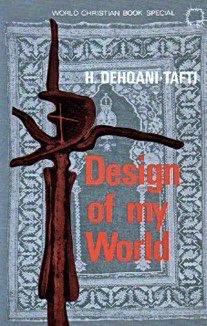

Cooperation with other Societies and the overseas world also continued and developed. In the 1950s a USCL initiative led to a series of World Christian Books, over thirty titles by international writers with a Lutterworth imprint, in collaboration with other UK missionary societies, alongside a similar series of Bible Guides, all mainly continuing the focus of the needs of the developing world (or the Third World as it had come to be known). One author, Hassan Dehqani-Tafti, subsequently Anglican Bishop of Iran, spent most of his early years in a Muslim atmosphere. His mother was a Christian and as he grew up he came to the conclusion that his mother’s faith was the way for him. Design of My World is the story of a young Christian from a background of non-Christian thought, ideas and way of life risen to high office in the church.
If World Christian Books demonstrated Lutterworth’s commitment to the developing world and the lengths to which it would go to demonstrate its cooperation with UK partners, their Student Bible Atlas was a good example of collaboration with the worldwide literature and literacy scene, demonstrating their sensitivity to the needs, facilities and limitations overseas, a readiness to adjust their publishing and printing programmes to be most helpful to the changed circumstances and varying demands, and the need to maximise local opportunities for the benefit of the local printers and publishers.
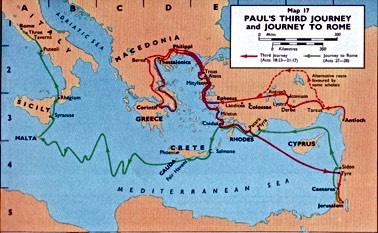

Subsidised by USCL and the Theological Education Fund the Student’s Bible Atlas ran to 16 pages of full colour maps, 24 pages of text including much detailed information, an Index and Glossary of Place Names plus text on the History and Geography of the Ancient Near East and Palestine. Heavily promoted overseas to enable churches and publishers to issue their own copy, in their own language. Many overseas agencies took it up, with permission to copy. Some purchased sheet stock, some made their own translation. Since in most cases printing full colour was not an option for them Lutterworth always kept a large stock of the maps, some with place names in their English format, some with blanks to enable the locals to supply their more familiar names, and so produce the finished copies themselves. Either way, the colour sheets were always supplied as a grant.
Meanwhile Lutterworth maintained the Society’s breadth of interest by ensuring that the more secular output of the Press for the UK market bore some relation to the original RTS emphasis on education, and especially education very broadly interpreted. In 1967, when CBMS wanted to offload Edinburgh House Press, with which USCL had cooperated earlier, Lutterworth seemed the obvious vehicle to take it over. That in turn coincided with, and provided the impetus for, the creation of Lutterworth Educational as a new imprint for books for religious education in schools at a time when UK education was broadening its religious studies beyond Bible teaching, and in view of the steady growth of other faiths and cultures in local communities the major focus was on information and understanding. Hence two important series, mostly in collaboration with Local Education Authorities, one on World Religions for Secondary Schools and the other on Understandng Your Neighbour for Primary Schools.