
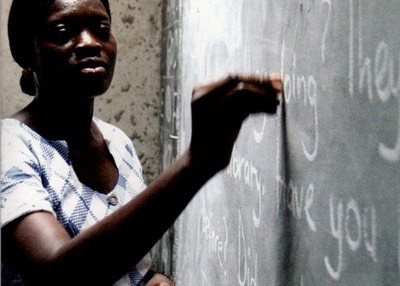
Reading Writing and Numeracy were undoubtedly the basics of education but they were only the basics and if that was Bray’s first objective the provision of literature, the setting up of libraries and free distribution to those most in need were quick to follow.
Catechetical Lending Libraries were set up. Good books were given to poor families. Packs of books were offered to clergy. The thought of selling books rather than giving them away clicked in after about five years, including a systematic publication of Prayer Books and Bibles (which until 1743 were always printed with the Apocrypha).
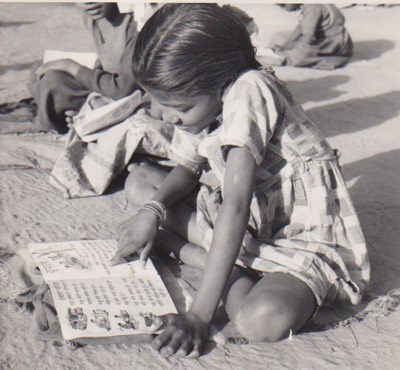
With the widening of the horizons went the broadening of the content, from Lord Nelson requesting a supply of tracts to discourage his sailors from bad language and popular replacements to the 'penny dreadfuls', to strengthen morality, honesty, integrity and the quality of life to basic Christian teaching, and on to an understanding of other faiths and cultures, foundations which continued to sustain the cause over 300 years and still counting.
From the outset their horizons knew no bounds. The state of London society may have been a powerful factor but the Founders well knew that conditions overseas were no better. Hence from the beginning of the 18th century books (again including the Bible) were translated into French, Arabic, Armenian, Tamil, Danish and Swedish, Irish and Gaelic, not forgetting forty titles in Welsh. This pattern continued for well over a hundred years during which time their enthusiasm never wavered and their zeal never flagged.

The middle of the 19th century saw other developments. A growing awareness that reading skills are quickly lost if not used led to a focus on the needs of children, especially in the developing world, and the realisation that investing resources in reading and literacy was of limited value if new readers had no access to new products. This in turn led to increasing emphasis on the needs of writers, publishers and distributors in the developing world as much if not more than at home. Hence the beginning of two major publishing houses, SPCK and Lutterworth Press.
First, a weekly Saturday Magazine (1832-44), a response to the secular Penny Magazine, thought unsuitable for Sunday reading, followed by a steady output of tracts and a wide range of children’s books, commentaries, textbooks and instructional broadsheets at ‘Twopence coloured, Three Farthings plain’. Not all were religious though the overall moral tone of a publication was always carefully monitored.
Next came The People’s Magazine with an initial circulation of 30,000 (c1864-73), The Dawn of Day, a ‘ha’penny a copy’ magazine, which began with a circulation of a few thousands in 1878 and twenty years had half-a-million readers, and finally The Child’s Pictorial launched in 1895 and merged the following year with Golden Sunbeams.
With increasing universal education towards the end of the 19th century the inadequacy of the voluntary system for coping with Literacy, Literature and Libraries was generally appreciated and understood, and the Forster Education Act of 1870 was an attempt to fill the gap. By this point SPCK had already moved beyond basic education to teacher training, collaborating with the National Society to set up a Teacher Training College at Carmarthen in 1849 followed by Whitelands, 1850-51, and from 1870 refocussed on scholarship grants for students teacher training.